THE ATHLETIC SPINE / LUMBAR SPINE SURGERY
Lumbar Laminectomy & Decompression
More room for nerves. More room for life.
Surgery to relieve nerve compression that limits standing, walking, and everyday activity.
Omid Jalali, MD · Orthopedic Spine Surgeon
Mission Viejo · Orange County
What is lumbar laminectomy & decompression?
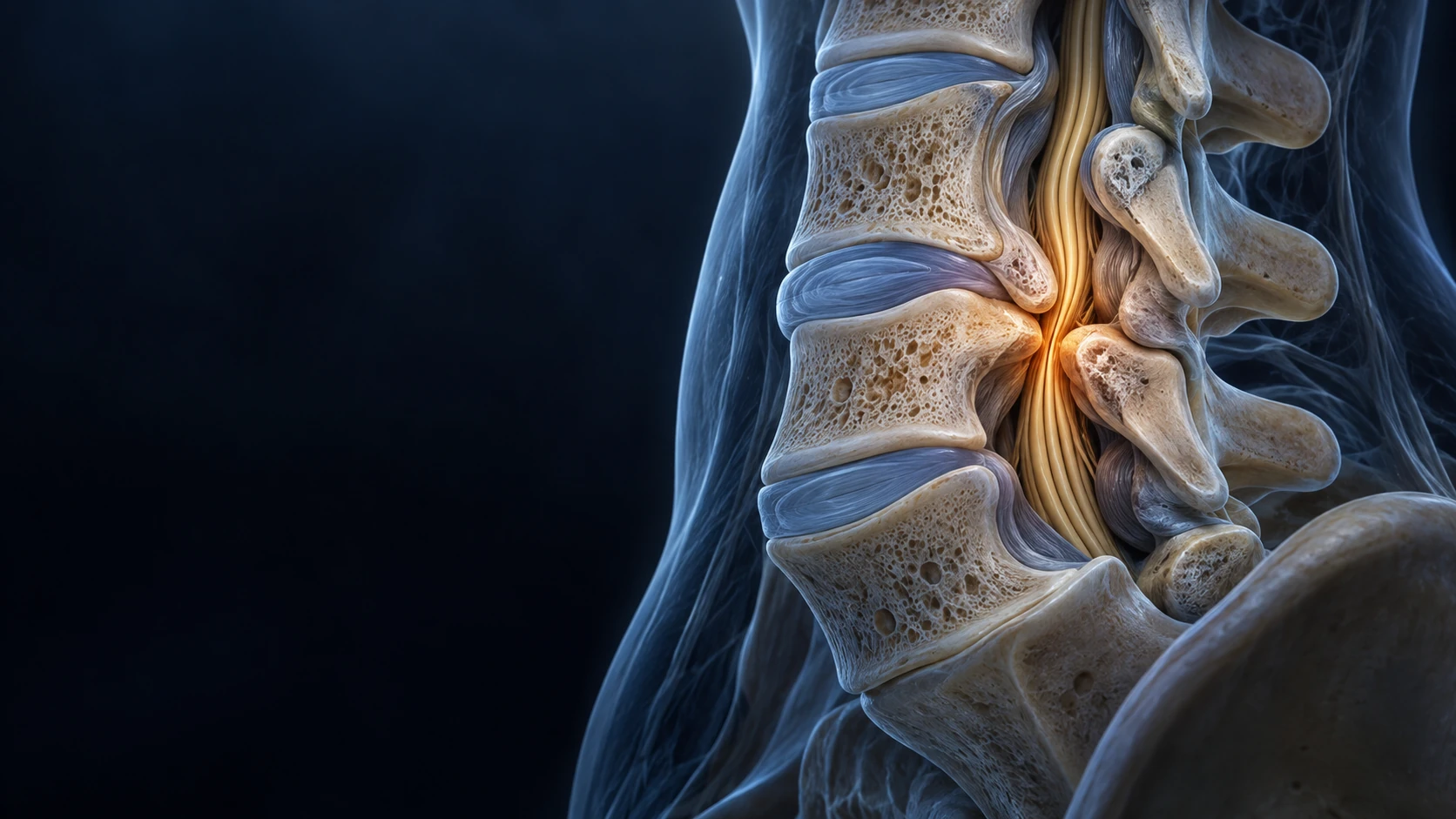
Lumbar decompression creates space for nerves crowded by spinal stenosis. A laminectomy removes part or all of the bony roof of the canal at the affected level. Other techniques, including laminotomy and foraminotomy, open smaller areas or enlarge the nerve exit openings.
The plan is tailored to where the narrowing occurs. Removing selected bone, thickened ligament, or other compressive tissue can relieve nerve pressure. Decompression and fusion are different procedures; many patients do not need a fusion.
Watch on YouTube ↗
When might it help?
Decompression may help when lumbar stenosis causes persistent leg symptoms or reduced standing and walking tolerance. Your examination and imaging should identify a pattern of compression that reasonably explains those limitations.
Leg heaviness when standing or walking
Neurogenic claudication can cause aching, heaviness, tingling, or weakness that builds with standing and eases with sitting or leaning forward. When this pattern restricts daily life despite appropriate nonsurgical treatment, decompression may offer a way to improve function.
Pain or weakness from a compressed nerve
Narrowing in a nerve opening can cause symptoms down one leg. Worsening weakness needs timely assessment. An operation is directed at the responsible levels rather than every degenerative change seen on a scan.
Deciding whether fusion is necessary
Instability, a significant deformity, or the amount of supporting bone that must be removed can lead to a recommendation for fusion. A stable spine may need decompression alone. Ask what specific finding supports either option.
Separating back pain from nerve symptoms
Leg symptoms related to compression are generally a clearer target than nonspecific back pain. Joint, disc, muscle, or hip problems may remain after the nerves are decompressed. Dr. Jalali will discuss which symptoms are likely to improve and what additional care may be needed.
RELATED CONDITIONS
What happens during surgery?
The surgeon exposes the involved level from the back and removes the tissue causing pressure. Depending on your anatomy, this may use a conventional exposure or a smaller tubular approach. The canal, lateral recesses, or nerve openings are addressed according to the location of stenosis.
One level or more
Some patients have focal narrowing, while others need several levels treated. The extent of surgery balances adequate nerve relief with preservation of stability. Fusion is added only when the overall plan requires it.
Recovery is a gradual return to activity.
Walking is encouraged early with appropriate assistance. Some patients go home the same day; more extensive procedures or medical needs may require a hospital stay. Back soreness at the surgical site can improve on a different timeline from leg symptoms.
Walking distance, work demands, and exercise are increased gradually. Numbness or weakness may take longer to recover and can persist. Follow-up helps assess wound healing, neurological function, and whether physical therapy would support your goals.
Understand the tradeoffs.
Risks include infection, bleeding, nerve injury, spinal fluid leak, persistent or recurrent stenosis, and postoperative instability. Additional surgery may be required. Relief can be incomplete when symptoms also arise from another condition.
YOUR QUESTIONS, ANSWERED
Before you decide.
Is a laminectomy the same as fusion?
No. Laminectomy makes room for nerves; fusion stabilizes selected vertebrae. They may be combined when both are needed.
Can this be minimally invasive?
Some patterns of stenosis can be treated through smaller exposures. The approach must still provide adequate decompression.
Will I walk farther afterward?
Improved walking tolerance can be a goal when stenosis is the limiting factor, but recovery also depends on nerve function, conditioning, and other health conditions.
Further patient education: AAOS: spinal fusion and decompression · AAOS: minimally invasive spine surgery
General education to support a conversation with your surgeon. Follow the instructions provided for your individual care.
LESS PAIN. BETTER MOVEMENT. ACTIVE LIFE.
Start with a conversation.
Bring your questions, your goals, and your prior imaging. Together, we can discuss which options fit your diagnosis and the activities you want to return to.
Request an appointment →Community Orthopedic Medical Group
26401 Crown Valley Pkwy #101, Mission Viejo, CA