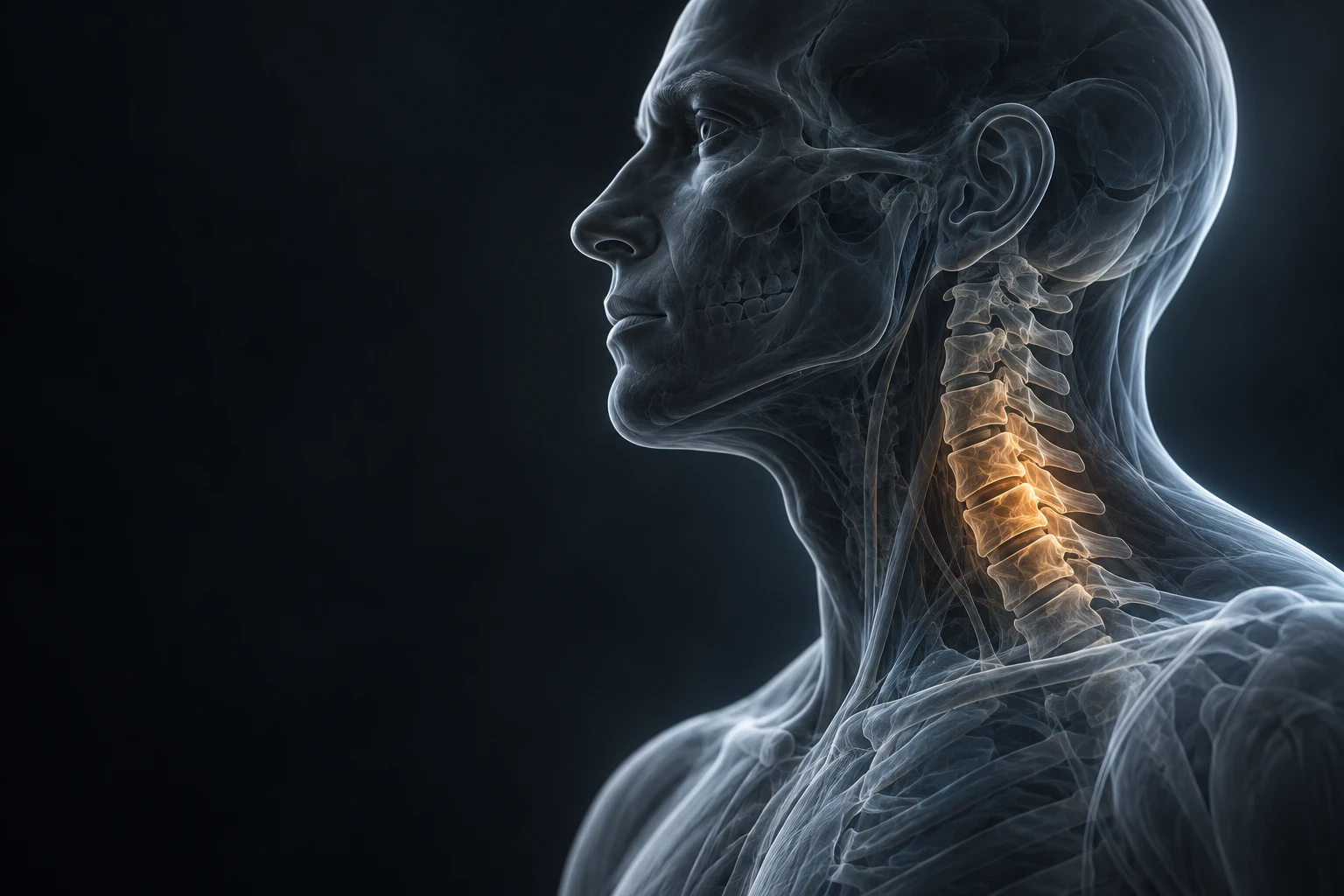
THE ATHLETIC SPINE / CERVICAL SPINE SURGERY
ACDF
Anterior Cervical Discectomy & Fusion
Relieving pressure on nerves or the spinal cord in the neck, while stabilizing the treated part of the spine.
Omid Jalali, MD · Orthopedic Spine Surgeon
Mission Viejo · Orange County
What is ACDF?
ACDF removes a damaged disc from the neck and joins the bones above and below it. The name describes the operation: anterior means from the front, cervical means neck, discectomy means disc removal, and fusion means the bones heal together.
It combines two goals: creating room for compressed nerves or the spinal cord, and supporting the spine where the disc was removed. The appropriate treatment depends on your symptoms and the cause of the compression.
Watch on YouTube ↗
This independent educational video illustrates a general procedure. Your surgical plan and recovery instructions may differ.
When might ACDF help?
ACDF may be an option when a damaged disc or bone spurs in the neck compress a nerve or the spinal cord. Conditions such as a cervical disc herniation, spinal stenosis, or degenerative changes can create this pressure. The decision depends on the symptoms it causes, the location of the compression, and how it affects your everyday life.
Arm pain, numbness, or weakness
Pressure on a nerve root—called cervical radiculopathy—can cause pain traveling from the neck into the shoulder, arm, or hand. Tingling, reduced sensation, or weakness may make it difficult to sleep, work, lift, or exercise. By removing the tissue pressing on the nerve, ACDF aims to relieve these symptoms. Numbness and weakness may improve more gradually, and longstanding nerve injury may not fully recover.
Changes in hand function or balance
Spinal cord compression can cause cervical myelopathy. You might notice difficulty buttoning a shirt, dropping objects, less coordinated hands, or unsteadiness when walking. When ACDF is the appropriate way to relieve that compression, an important goal is to protect neurological function and reduce the risk of further decline. Improvement is possible, but surgery cannot always reverse existing spinal cord injury.
When is it time to consider surgery?
For nerve-related symptoms, surgery is often considered when appropriate nonsurgical care has not provided enough relief and pain or weakness continues to limit daily activities. Progressive weakness or signs of spinal cord dysfunction warrant prompt specialist assessment and may justify earlier surgery. Not every patient needs to complete the same treatment sequence before a surgical discussion.
Matching the operation to your goals
Dr. Jalali will compare your symptoms, examination, and imaging to identify which levels are responsible. Neck pain may improve when it comes from the treated segment, but ACDF is not a solution for every cause of neck pain. Your discussion should cover expected benefits, remaining limitations, and alternatives such as continued nonsurgical care, cervical disc replacement, or posterior decompression.
RELATED CONDITIONS
What happens during surgery?
Under anesthesia, the surgeon reaches the disc through an incision at the front of the neck. Disc material and bone spurs causing compression are removed. A spacer or structural graft replaces the disc and helps support the space between the vertebrae.
Bone graft supports healing across the treated level. A plate and screws or another fixation system may hold the construct stable while fusion develops. The implant supports the bones immediately; the biological fusion develops over time.
One level or several?
The number of levels treated follows the location of the problem. Your consultation should make clear which levels are involved and how that affects recovery and neck movement.
Recovery is a gradual return to activity.
Some patients go home the day of surgery; others stay in the hospital. Early recovery can include a sore throat, swallowing discomfort, or a temporary change in voice. Walking usually begins early, with other activities increased according to your surgeon’s instructions.
Collar use, driving, work, exercise, and physical therapy are individualized. Feeling better does not mean the fusion has finished healing. Follow-up visits help guide progression.
Plan for your everyday life.
Before surgery, discuss your work demands, home support, travel, and exercise goals. Ask for clear guidance on lifting, medications, wound care, and whom to contact with concerns. Bone health, nutrition, and avoiding nicotine matter to fusion healing.
Understand the tradeoffs.
Risks include infection, bleeding, nerve or spinal cord injury, swallowing or voice problems, failure of the bones to fuse, implant problems, and persistent symptoms. Rare complications can involve breathing or injury to structures at the front of the neck. Further surgery may be needed.
Fusion reduces movement at the treated levels. Your personal risk and expected benefit depend on the operation and your health; these deserve an individual discussion.
YOUR QUESTIONS, ANSWERED
Before you decide.
Will I still be able to move my neck?
The treated levels no longer move independently. The effect you notice depends on how many levels are fused and your neck movement before surgery.
Is fusion the only option?
No. Ask whether nonsurgical care, disc replacement, or a posterior procedure could address your particular problem.
What should I bring to my consultation?
Bring your imaging and reports, medication list, prior treatment history, and a description of how symptoms affect your day.
Further patient education: AAOS: cervical surgery options · Mayfield: ACDF education · Mayo Clinic: fusion
General education to support a conversation with your surgeon. Follow the instructions provided for your individual care.
LESS PAIN. BETTER MOVEMENT. ACTIVE LIFE.
Start with a conversation.
Bring your questions, your goals, and your prior imaging. Together, we can discuss which options fit your diagnosis and the activities you want to return to.
Request an appointment →Community Orthopedic Medical Group
26401 Crown Valley Pkwy #101, Mission Viejo, CA