THE ATHLETIC SPINE / VERTEBRAL FRACTURE CARE
Kyphoplasty & Vertebral Augmentation
Focused treatment for a painful compression fracture.
Stabilizing selected vertebral fractures as part of a broader plan for mobility and bone health.
Omid Jalali, MD · Orthopedic Spine Surgeon
Mission Viejo · Orange County
What is kyphoplasty & vertebral augmentation?
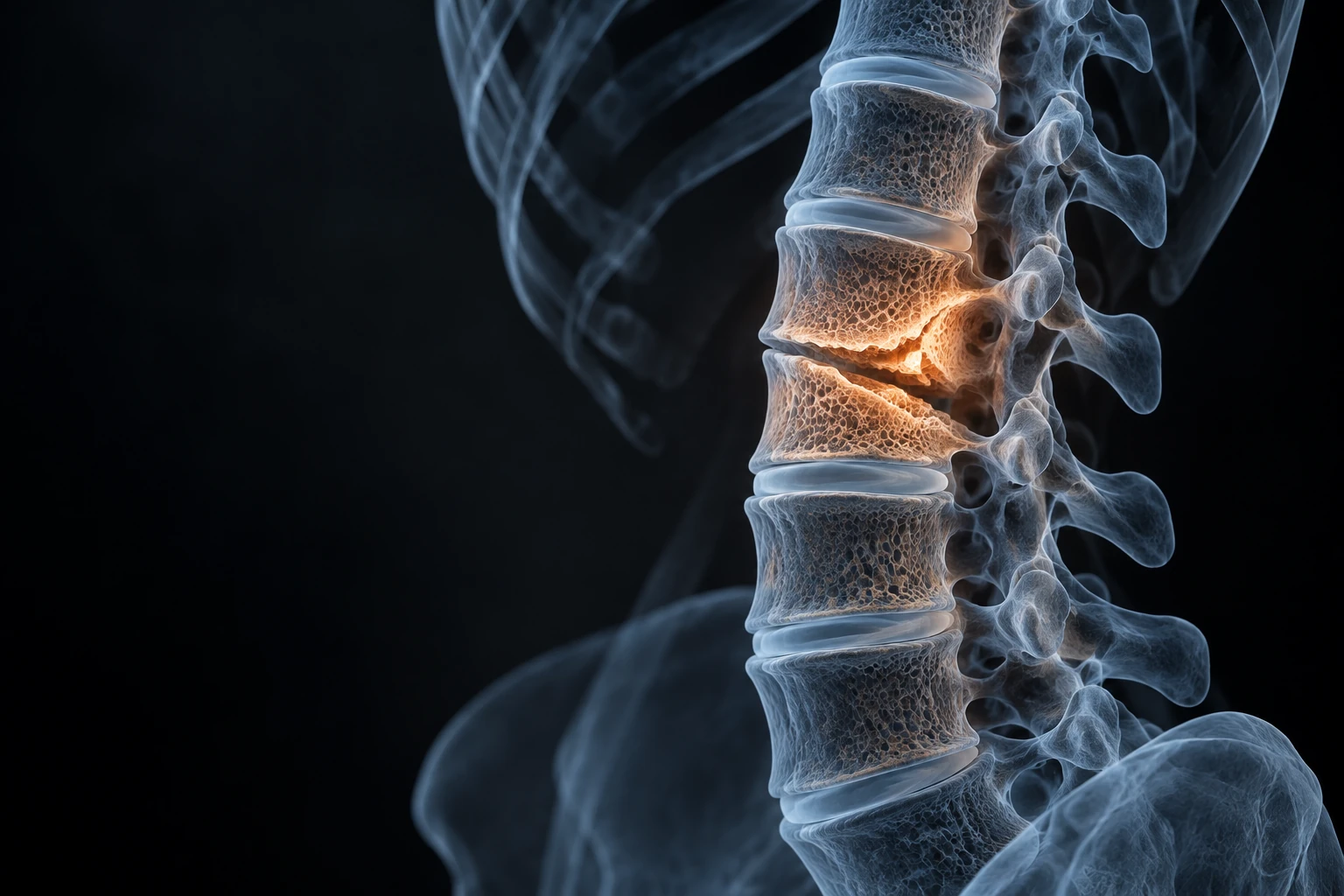
Vertebral augmentation places bone cement into a fractured vertebral body to help stabilize it. Kyphoplasty is a form of augmentation that may use a balloon to create space before cement is introduced. These procedures can be considered for selected painful compression fractures.
They do not treat osteoporosis itself, remove all sources of back pain, or guarantee restoration of lost vertebral height. Fracture assessment, symptom control, and prevention of future fractures remain essential parts of care.
Kyphoplasty animation
Watch kyphoplasty · Veritas Health ↗
Vertebroplasty animation
Watch on YouTube ↗
When might it help?
Augmentation may help when pain can be traced to an appropriate vertebral compression fracture and substantially limits movement or daily function. The timing, imaging appearance, and response to nonsurgical treatment guide the decision.
Pain that matches an active fracture
A recent or incompletely healed fracture can cause focal pain with standing, walking, or changing position. MRI or other imaging may help distinguish an active painful fracture from an older deformity or another cause of pain.
Movement remains difficult despite care
Medication, activity adjustment, and sometimes a brace may be tried first. When pain remains severe or makes mobilization difficult, augmentation may be discussed. The decision is individualized rather than based on a fixed waiting period for everyone.
Fractures that need a different strategy
A fracture with substantial instability, spinal canal compromise, or neurological symptoms may require another form of treatment. Infection and other contraindications must be excluded. A suspected cancer-related fracture requires additional evaluation and coordinated care.
A plan beyond the procedure
Dr. Jalali will review whether the fracture is the dominant source of pain and what benefit is realistic. Bone density, fall risk, nutrition, and osteoporosis treatment deserve attention even if the procedure provides pain relief.
RELATED CONDITIONS
What happens during surgery?
Using imaging guidance, the surgeon accesses the vertebral body through a small incision. In kyphoplasty, a balloon or another cavity-creating device may be used before cement is placed. Cement delivery is monitored carefully to limit leakage.
What stabilization can and cannot do
The procedure may reduce painful movement within the fracture. Height restoration varies and is not the sole goal. It does not replace decompression when a nerve or the spinal cord needs direct relief.
Recovery is a gradual return to activity.
Some patients return home the day of the procedure; others need observation based on their fracture and medical condition. Activity resumes according to pain, safety, and the treating team’s instructions. Local soreness may occur.
Continued pain should be reassessed rather than assumed to be normal. Follow-up includes the broader fracture-prevention plan. Safe walking, appropriate strengthening, and treatment of poor bone quality support long-term mobility.
Understand the tradeoffs.
Risks include cement leakage, nerve or spinal cord injury, infection, bleeding, persistent pain, and complications from anesthesia. Rarely, cement can travel into blood vessels and cause serious problems. Further fractures can occur because underlying bone weakness remains.
YOUR QUESTIONS, ANSWERED
Before you decide.
Is kyphoplasty appropriate for every compression fracture?
No. Many fractures improve with nonsurgical care, and some fracture patterns need a different operation or additional evaluation.
Will it cure osteoporosis?
No. A separate bone-health plan is needed to reduce the risk of future fractures.
Does it restore normal vertebral height?
Some height may be restored, but this varies. Pain relief and appropriate stabilization are the primary considerations.
Further patient education: Mayfield: vertebroplasty and kyphoplasty
General education to support a conversation with your surgeon. Follow the instructions provided for your individual care.
LESS PAIN. BETTER MOVEMENT. ACTIVE LIFE.
Start with a conversation.
Bring your questions, your goals, and your prior imaging. Together, we can discuss which options fit your diagnosis and the activities you want to return to.
Request an appointment →Community Orthopedic Medical Group
26401 Crown Valley Pkwy #101, Mission Viejo, CA