THE ATHLETIC SPINE / THORACIC SPINE SURGERY
Thoracic Discectomy & Decompression
Careful planning for a less common spinal problem.
Selected surgery to relieve nerve or spinal cord compression in the mid-back.
Omid Jalali, MD · Orthopedic Spine Surgeon
Mission Viejo · Orange County
What is thoracic discectomy & decompression?
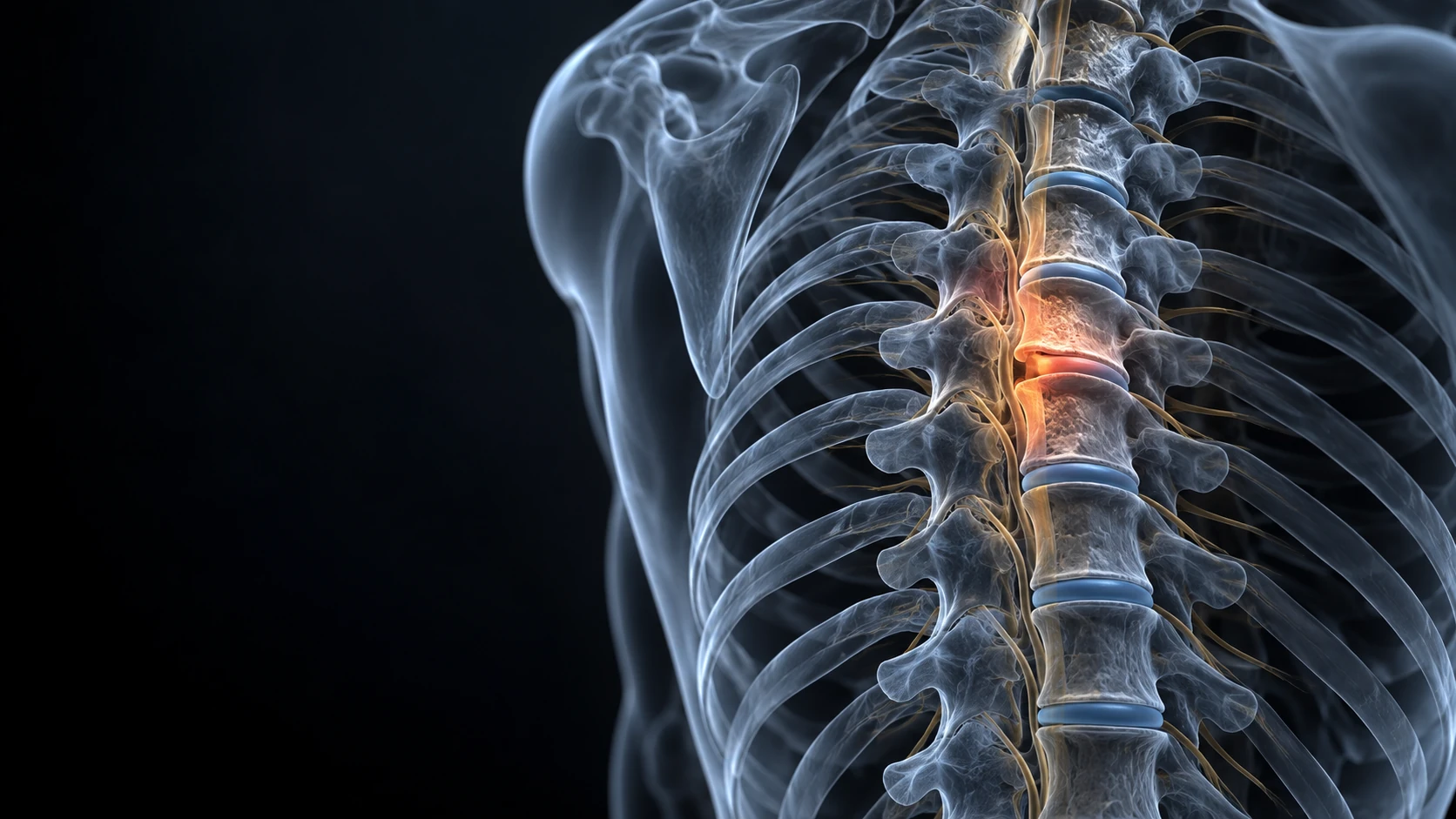
Thoracic discectomy removes disc material pressing on a nerve or the spinal cord in the middle portion of the spine. Decompression may also address bone or other tissue narrowing the spinal canal. These operations are less commonly needed than cervical or lumbar procedures.
The thoracic spinal cord, ribs, and chest structures make access different from surgery in the lower back. A disc’s size, location, and degree of calcification are central to choosing a safe approach.
When might it help?
Many thoracic disc abnormalities found on imaging do not require surgery. An operation is considered when a specific compressive problem matches significant symptoms or threatens neurological function.
Spinal cord symptoms
Leg weakness, stiffness, imbalance, or difficulty walking can reflect thoracic myelopathy. Progressive changes warrant prompt specialist evaluation. The goal may include protecting remaining function, and existing spinal cord injury may not fully recover.
Persistent radiating pain
A compressed thoracic nerve can cause band-like pain around the chest or abdomen. Other causes of pain in these regions must be considered. Surgery may be an option when a clearly identified disc problem remains disabling despite appropriate nonsurgical care.
A location that requires a tailored approach
A central calcified disc poses different challenges from a softer fragment toward the side. MRI evaluates the cord and soft tissues, while CT may help characterize calcification and bone. These findings shape both the route and the risks of surgery.
Balancing benefit and complexity
Dr. Jalali will discuss whether decompression alone is appropriate or stabilization is also needed. The expected neurological benefit, medical fitness, prior surgery, and recovery demands matter more than the appearance of the scan alone.
RELATED CONDITIONS
What happens during surgery?
The route may be through a posterolateral or lateral exposure, or in selected cases through the chest. The surgeon works to relieve compression while minimizing manipulation of the spinal cord. Some approaches involve removing part of a rib or other bone to create access.
When fusion may be added
Stabilization may be needed if the condition or the required exposure compromises support. The levels and implants depend on the specific problem. This should be explained as part of the preoperative plan.
Recovery is a gradual return to activity.
Hospital care is commonly needed, with attention to neurological function, pain control, and walking. A chest-based approach can require additional respiratory care. The recovery path depends strongly on the route and extent of surgery.
Rehabilitation may address gait, balance, and strength. Neurological improvement can be gradual and incomplete. Before surgery, discuss home assistance, time away from work, and how activity will be advanced.
Understand the tradeoffs.
Risks include spinal cord or nerve injury, weakness or paralysis, spinal fluid leak, infection, bleeding, and persistent symptoms. Chest-based approaches can also affect the lungs or surrounding structures. Fusion, when required, adds risks related to healing and implants.
YOUR QUESTIONS, ANSWERED
Before you decide.
Does a thoracic disc herniation always need surgery?
No. Symptoms, neurological findings, and the nature of the compression determine whether surgery is appropriate.
Why might CT be needed as well as MRI?
CT can show calcification and bony anatomy that affect the surgical approach.
Is the recovery like a lumbar microdiscectomy?
Not necessarily. Thoracic anatomy and the required route can make the operation and recovery substantially different.
Further patient education: AANS: herniated disc · AAOS: spinal fusion
General education to support a conversation with your surgeon. Follow the instructions provided for your individual care.
LESS PAIN. BETTER MOVEMENT. ACTIVE LIFE.
Start with a conversation.
Bring your questions, your goals, and your prior imaging. Together, we can discuss which options fit your diagnosis and the activities you want to return to.
Request an appointment →Community Orthopedic Medical Group
26401 Crown Valley Pkwy #101, Mission Viejo, CA