THE ATHLETIC SPINE / CERVICAL SPINE SURGERY
Cervical Laminoplasty
Creating space while preserving a mobile spine.
An option for selected patients with multilevel spinal cord compression who do not need a planned fusion.
Omid Jalali, MD · Orthopedic Spine Surgeon
Mission Viejo · Orange County
What is cervical laminoplasty?
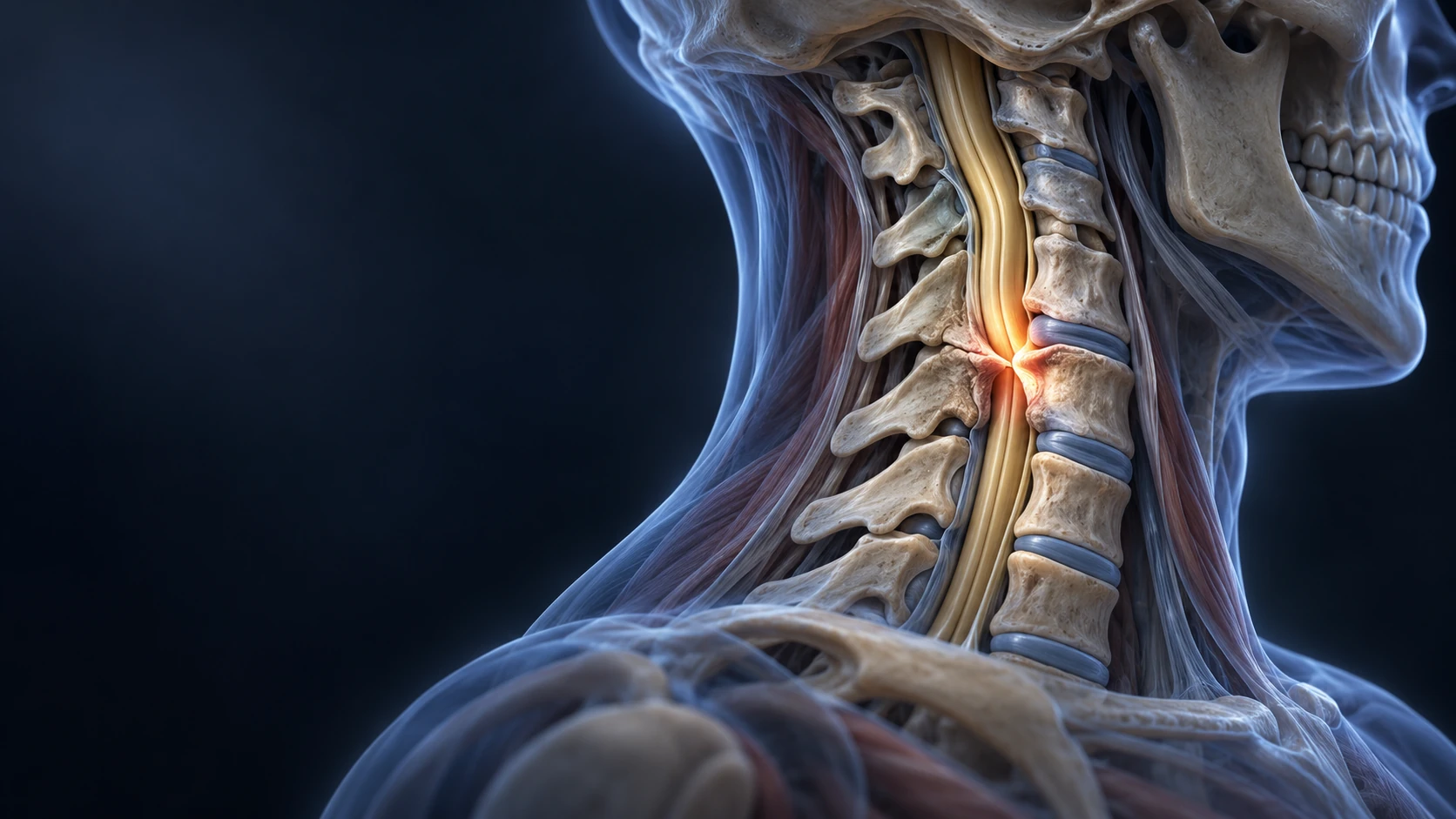
Cervical laminoplasty expands the spinal canal by reshaping and opening the bony arch at the back of the vertebrae. Rather than removing the entire arch, the surgeon creates a hinge and holds the expanded position with small plates or other supports. This gives the spinal cord additional room.
Laminoplasty usually does not fuse the treated vertebrae together. It can preserve more movement than a multilevel fusion, although neck motion may still decrease. Its suitability depends on alignment, stability, and the source of your symptoms.
Watch on YouTube ↗
When might it help?
Laminoplasty may be considered for cervical myelopathy caused by compression across several levels. It is a way of protecting spinal cord function in a neck that has enough stability and an appropriate alignment for this form of decompression.
Symptoms of spinal cord pressure
Loss of hand dexterity, dropping objects, imbalance, and difficulty walking can reflect cervical myelopathy. These changes deserve specialist assessment. The operation may improve function, but preventing additional decline is often an important reason to act.
A stable neck with suitable alignment
The shape of the neck affects how the cord can move away from compression after the canal is expanded. Significant kyphosis or instability may make fusion or an anterior approach more appropriate. Standing X-rays and other imaging help guide selection.
Understanding the role of neck pain
Laminoplasty is mainly intended to treat cord compression, not every source of neck pain. Significant pain arising from unstable or arthritic segments may change the recommendation. Preserving motion is not necessarily beneficial at a painful, poorly functioning level.
Choosing the right form of decompression
Dr. Jalali will compare laminoplasty with laminectomy and fusion or an anterior procedure. The discussion includes the number of levels, previous surgery, expected neurological benefit, and the possibility of ongoing symptoms despite an adequately expanded canal.
RELATED CONDITIONS
What happens during surgery?
Through an incision behind the neck, the surgeon exposes the involved laminae and creates a controlled opening in the bony canal. The expanded arch is secured in position. Depending on the pattern of nerve-root symptoms, additional targeted decompression may be performed.
Why are plates used without fusion?
The small implants hold the opened laminae in position while the bone heals. They serve a different purpose from a construct designed to fuse one vertebral body to the next.
Recovery is a gradual return to activity.
Recovery commonly begins in the hospital with walking and guidance on safe movement. Posterior neck and shoulder soreness is expected early. Collar use, wound care, and rehabilitation depend on the surgical plan.
Hand function and balance may change gradually rather than immediately. Follow-up assesses both healing and neurological progress. Return to driving, work, and sport should reflect comfortable movement, strength, medication use, and your surgeon’s recommendations.
Understand the tradeoffs.
Potential problems include infection, bleeding, spinal fluid leak, nerve or spinal cord injury, C5-related shoulder or arm weakness, persistent neck pain, and reduced range of motion. Loss of alignment, recurrent compression, or implant problems may require additional treatment or fusion.
YOUR QUESTIONS, ANSWERED
Before you decide.
Is laminoplasty a fusion?
Usually it is not. It expands the spinal canal while retaining motion between the vertebrae, though some motion loss can occur.
Can everyone with cervical stenosis have it?
No. Alignment, stability, neck pain, and the pattern of compression influence whether it is suitable.
What if symptoms do not fully improve?
The goal may include stopping progression. Persistent symptoms can reflect prior cord injury or another condition and should be reviewed during follow-up.
Further patient education: HSS: cervical laminoplasty · AAOS: spinal fusion
General education to support a conversation with your surgeon. Follow the instructions provided for your individual care.
LESS PAIN. BETTER MOVEMENT. ACTIVE LIFE.
Start with a conversation.
Bring your questions, your goals, and your prior imaging. Together, we can discuss which options fit your diagnosis and the activities you want to return to.
Request an appointment →Community Orthopedic Medical Group
26401 Crown Valley Pkwy #101, Mission Viejo, CA