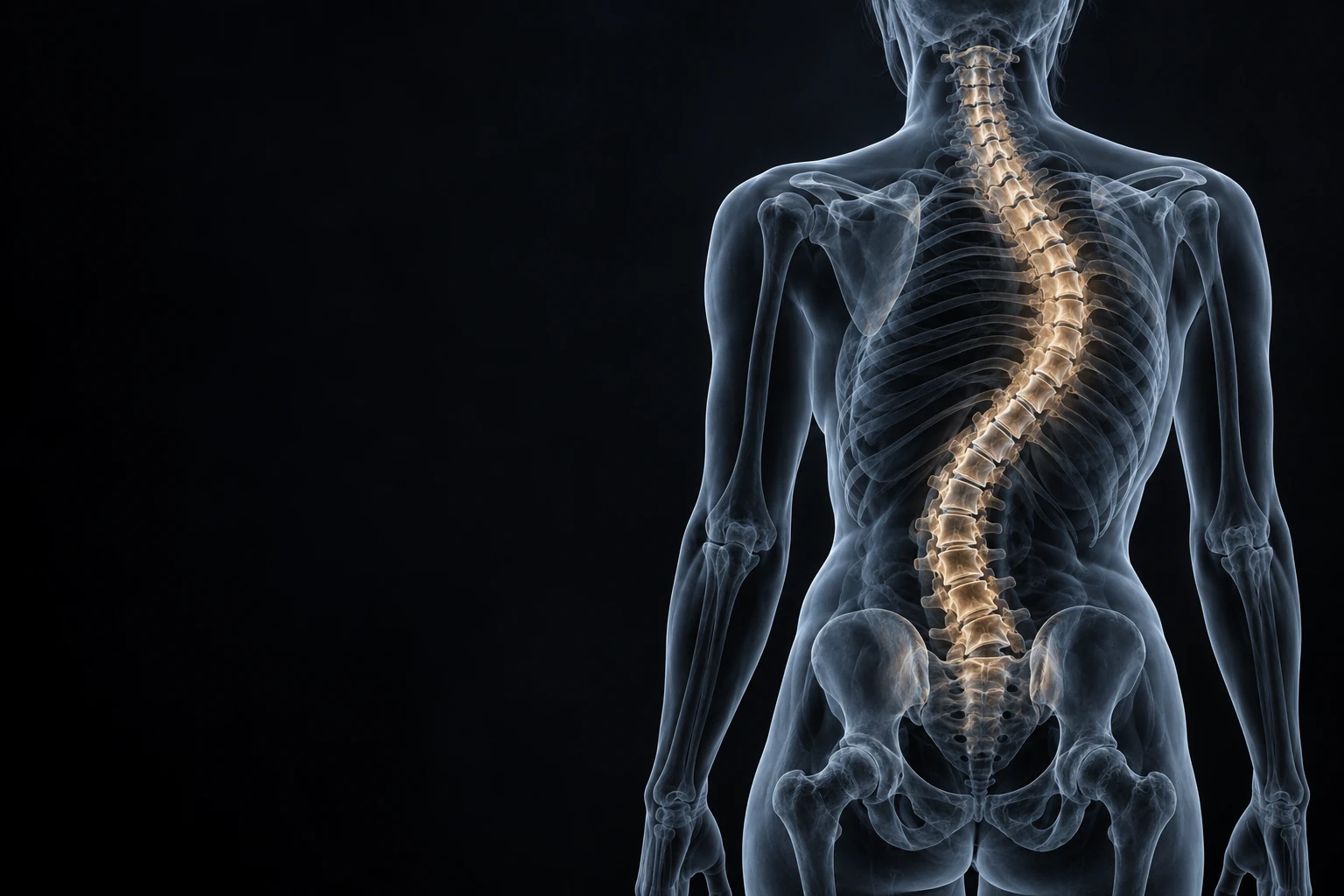
THE ATHLETIC SPINE / COMPLEX SPINE CARE
Adult Spinal Deformity Reconstruction
Restoring balance with an individual plan.
Reconstruction for selected patients whose spinal alignment limits comfort, function, and mobility.
Omid Jalali, MD · Orthopedic Spine Surgeon
Mission Viejo · Orange County
What is adult spinal deformity reconstruction?
Adult spinal deformity reconstruction addresses an abnormal curve or imbalance that contributes to pain, nerve compression, or difficulty standing upright. It may combine nerve decompression, realignment, and fusion across selected levels.
The aim is a functional, durable balance for your body rather than a perfectly straight X-ray. Some people need a limited operation; others require a longer reconstruction or staged procedures. Many patients can manage symptoms without surgery.
When might it help?
Reconstruction may be considered when scoliosis, kyphosis, or another alignment problem causes substantial limitations despite appropriate nonsurgical care. The size of a curve alone does not determine the recommendation.
Standing upright becomes exhausting
A forward-pitched or sideways imbalance can make standing and walking require extra effort. Patients may bend their knees or lean on support to compensate. The evaluation considers the whole spine and pelvis, not only the painful area.
Leg symptoms accompany the curve
Narrowed nerve spaces can cause radiating pain, numbness, or weakness. Some patients mainly need targeted decompression, while others need realignment and stabilization to address the underlying mechanics.
Symptoms and goals justify a larger operation
Reconstruction can involve a substantial recovery. Dr. Jalali will discuss the activities you hope to regain, the limits of nonsurgical treatment, and the likely tradeoffs of the proposed fusion length. A smaller operation may be appropriate if it addresses the main problem.
Preparing the body for healing
Standing full-spine imaging, bone-density assessment, and a review of nutrition, medical conditions, and prior surgery help determine readiness. Bone-health treatment or other optimization may be needed before an operation. Good planning includes support at home and a realistic rehabilitation strategy.
RELATED CONDITIONS
What happens during surgery?
The operation may combine decompression with interbody work, screws and rods, and bone graft. Selected rigid deformities require osteotomies—controlled cuts in bone—to allow correction. The approach can be posterior, anterior, lateral, or a combination.
Why a staged plan may be used
Some reconstructions are divided into more than one operation. The purpose and timing should be clear, along with which levels will be fused and how the plan affects remaining motion.
Recovery is a gradual return to activity.
Recovery generally involves a hospital stay and may include inpatient rehabilitation. Early goals include safe transfers, walking, pain control, and protection of the surgical repair. Home assistance is often important.
Strength and endurance rebuild over months, and bone healing continues beyond the early recovery period. Follow-up monitors alignment, implants, and fusion. Return to work or recreation depends on the extent of reconstruction and your progress.
Understand the tradeoffs.
Risks include significant blood loss, infection, nerve or spinal cord injury, blood clots, failure of fusion, implant failure, and incomplete symptom relief. Fracture or failure near the ends of a long construct can occur, particularly with poor bone quality. Additional surgery may be needed.
YOUR QUESTIONS, ANSWERED
Before you decide.
Does scoliosis always require a long fusion?
No. Treatment depends on symptoms, balance, flexibility, and nerve compression. Some patients need no surgery or a more limited procedure.
Will my spine be completely straight?
The goal is an appropriate balance and improved function. Complete correction is not always necessary or safe.
Why discuss bone health first?
Bone quality affects fixation and healing. Treating osteoporosis can be an important part of reducing surgical risk.
Further patient education: HSS: degenerative scoliosis · AANS: scoliosis
General education to support a conversation with your surgeon. Follow the instructions provided for your individual care.
LESS PAIN. BETTER MOVEMENT. ACTIVE LIFE.
Start with a conversation.
Bring your questions, your goals, and your prior imaging. Together, we can discuss which options fit your diagnosis and the activities you want to return to.
Request an appointment →Community Orthopedic Medical Group
26401 Crown Valley Pkwy #101, Mission Viejo, CA