THE ATHLETIC SPINE / LUMBAR SPINE SURGERY
Lumbar Fusion
Stability where your spine needs it.
A personalized approach to joining selected vertebrae in the lower back, with the goal of improving stability, alignment, and function.
Omid Jalali, MD · Orthopedic Spine Surgeon
Mission Viejo · Orange County
What is lumbar fusion?
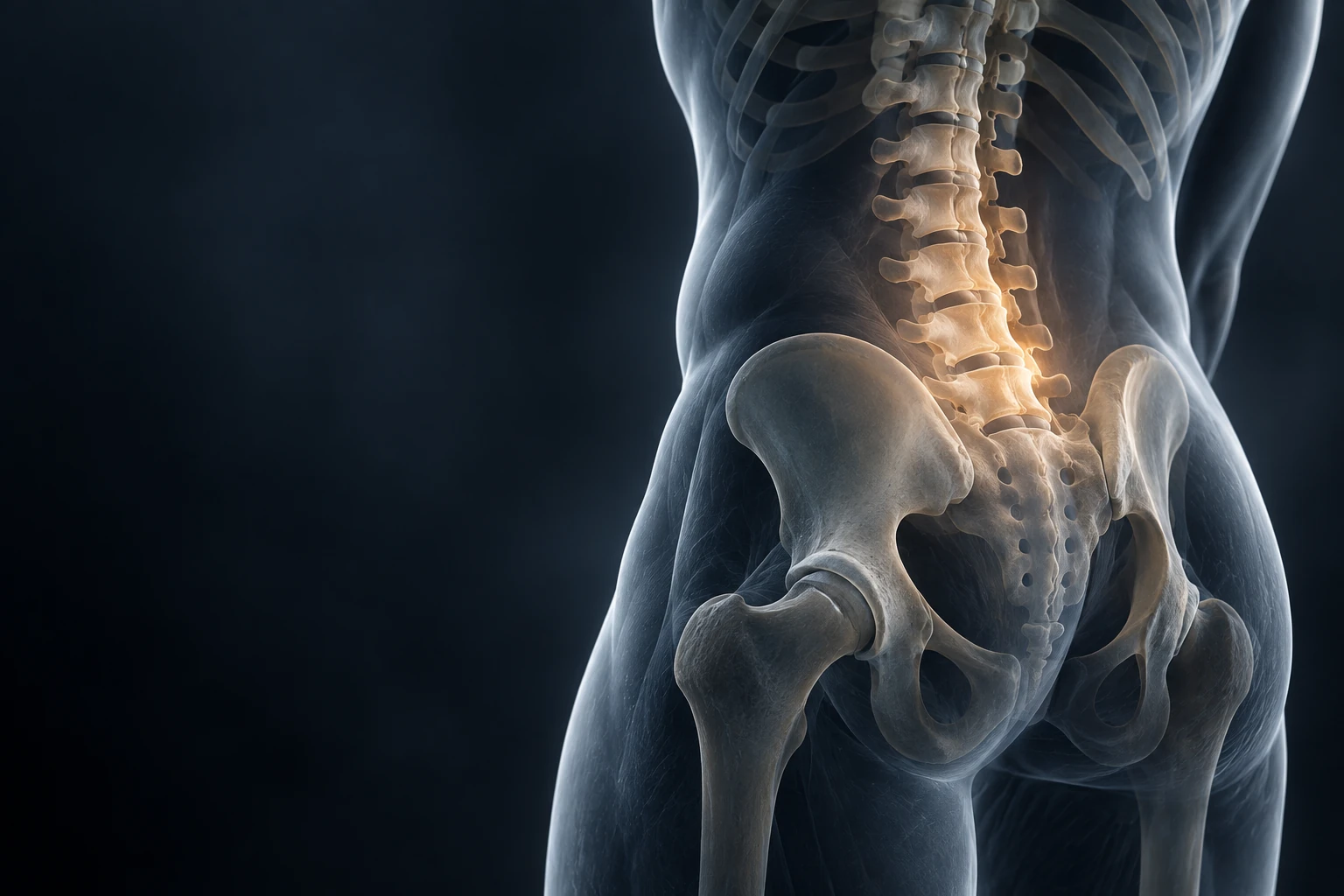
Lumbar fusion allows two or more vertebrae in the lower back to heal together. Bone graft encourages that healing, while implants may provide support as a solid connection forms. Fusion stops movement at the treated segment.
It may be combined with decompression to create space for compressed nerves. These steps serve different purposes: decompression addresses pressure, while fusion addresses a need for stability. Not every patient who needs decompression also needs fusion.
A general introduction to fusion. The approaches used and recovery recommendations vary with your individual surgical plan.
When might lumbar fusion help?
Lumbar fusion may be considered when a specific problem with stability or alignment contributes to back pain, nerve compression, or difficulty standing and walking. The aim is to treat the part of the spine responsible for those limitations. A worn disc on an MRI, by itself, does not establish a need for fusion.
Instability or a slipped vertebra
In some patients with spondylolisthesis, one vertebra has shifted relative to another. If that movement is painful or contributes to nerve compression, fusion may be used to stabilize the segment. Not every slip is unstable or needs surgery; your symptoms, examination, and imaging help determine whether stabilization adds value.
Nerve compression with a need for support
Leg pain, numbness, or weakness can arise when nerves are crowded by stenosis. Decompression makes room for those nerves. Fusion may be added when there is associated instability, deformity, or when the necessary decompression would leave the segment inadequately supported. Many patients can instead be treated with decompression alone.
Loss of alignment and standing tolerance
Selected patients with scoliosis or a forward-pitched posture may struggle to stand upright, walk comfortably, or complete everyday tasks. Fusion can form part of a broader reconstruction that addresses alignment and nerve pressure. The amount of correction and the number of levels require careful planning around bone health, flexibility, and the demands of recovery.
Persistent symptoms despite appropriate care
A surgical discussion may be appropriate when symptoms remain limiting despite a reasonable course of rehabilitation, activity modification, medication, or selected injections. Worsening weakness can change the timing. Your consultation should identify which symptoms fusion is expected to help, what nonsurgical options remain, and whether a smaller operation could achieve your goals.
Setting realistic expectations
Fusion does not treat every source of back pain or reverse all nerve damage. Dr. Jalali will consider your prior treatment, overall health, nicotine use, and bone quality alongside imaging. The goal is a plan that balances potential pain relief and improved function with the loss of movement at the treated levels and the time needed for healing.
RELATED CONDITIONS
Different approaches. An individual plan.
The route to the spine depends on the levels being treated, alignment, nerve compression, prior surgery, and your anatomy. An interbody fusion places graft and usually a spacer within the disc space. Other graft may be placed along the back of the spine.
The videos below explain individual approaches. Your operation may combine techniques; follow the plan and recovery instructions discussed with Dr. Jalali.
TLIF: from the back, toward one side
A transforaminal lumbar interbody fusion reaches the disc from a posterior approach, working from one side around the nerves. Decompression and stabilization can be performed through this approach. Selected cases can use minimally invasive techniques.
Watch on YouTube ↗
ALIF: from the front
An anterior lumbar interbody fusion reaches the disc through the abdomen. It allows access to the front of the disc space and may help restore disc height and alignment. The nearby blood vessels and abdominal anatomy are important planning considerations; posterior fixation may also be needed.
Watch on YouTube ↗
Lateral interbody fusion: from the side
A lateral approach reaches the disc from the flank. It may help restore disc height and alignment at suitable levels. The surrounding nerves, muscles, and the level being treated influence whether this route is appropriate.
Watch on YouTube ↗
Posterior or combined techniques
Graft can also be placed along the back of the spine in a posterolateral fusion. Some plans combine approaches or use more than one stage. Ask why your proposed approach—and the number of levels—is appropriate for you.
Can it be minimally invasive?
Some lumbar fusions use smaller incisions and techniques that limit disruption of surrounding muscles. The approach should still accomplish the decompression, stability, and alignment your condition requires.
A recovery plan built around your life.
Early recovery focuses on safe movement, walking, pain control, and getting home with the support you need. The length of the hospital stay varies with the extent of surgery and your health.
Activity progresses while the fusion matures over months. Your surgeon will guide lifting, bending, twisting, physical therapy, and return to work. A desk job and a physically demanding job may require different plans.
Prepare before surgery.
Discuss bone health, nutrition, nicotine use, diabetes, medications, and help at home. Do not change prescribed medicines without instructions from your care team. Follow-up assessment helps determine when it is appropriate to advance activity.
Benefits and tradeoffs belong together.
Potential complications include infection, bleeding, blood clots, nerve injury, spinal fluid leak, failure of the fusion to heal, implant problems, persistent pain, and further surgery. Risks differ by approach; anterior and lateral procedures involve different nearby structures.
Fusion reduces movement at the treated levels and can affect the demands on neighboring parts of the spine. It does not guarantee that every source of back or leg pain will resolve.
YOUR QUESTIONS, ANSWERED
Before you decide.
Will I need screws and rods?
Many fusion operations use implants for support while bone heals. The construct depends on the specific procedure; ask what is planned and why.
Why not decompress the nerves without fusion?
That may be an option. Your surgeon should explain whether instability, alignment, or the extent of decompression creates a separate reason for fusion.
When can I return to sports?
There is no single timetable. Discuss your sport, the extent of surgery, healing progress, and a staged return with your surgeon.
Further patient education: AAOS: spinal fusion · AAOS: anterior approach · AAOS: lateral approach · Mayo Clinic: fusion · AAOS: minimally invasive surgery
General education to support a conversation with your surgeon. Follow the instructions provided for your individual care.
LESS PAIN. BETTER MOVEMENT. ACTIVE LIFE.
Start with a conversation.
Bring your questions, your goals, and your prior imaging. Together, we can discuss which options fit your diagnosis and the activities you want to return to.
Request an appointment →Community Orthopedic Medical Group
26401 Crown Valley Pkwy #101, Mission Viejo, CA