THE ATHLETIC SPINE / SURGICAL APPROACHES
Minimally Invasive Spine Surgery
Smaller incisions. The same essential goals.
Many decompression and fusion procedures can use approaches designed to limit disruption of surrounding tissue.
Omid Jalali, MD · Orthopedic Spine Surgeon
Mission Viejo · Orange County
What is minimally invasive spine surgery?
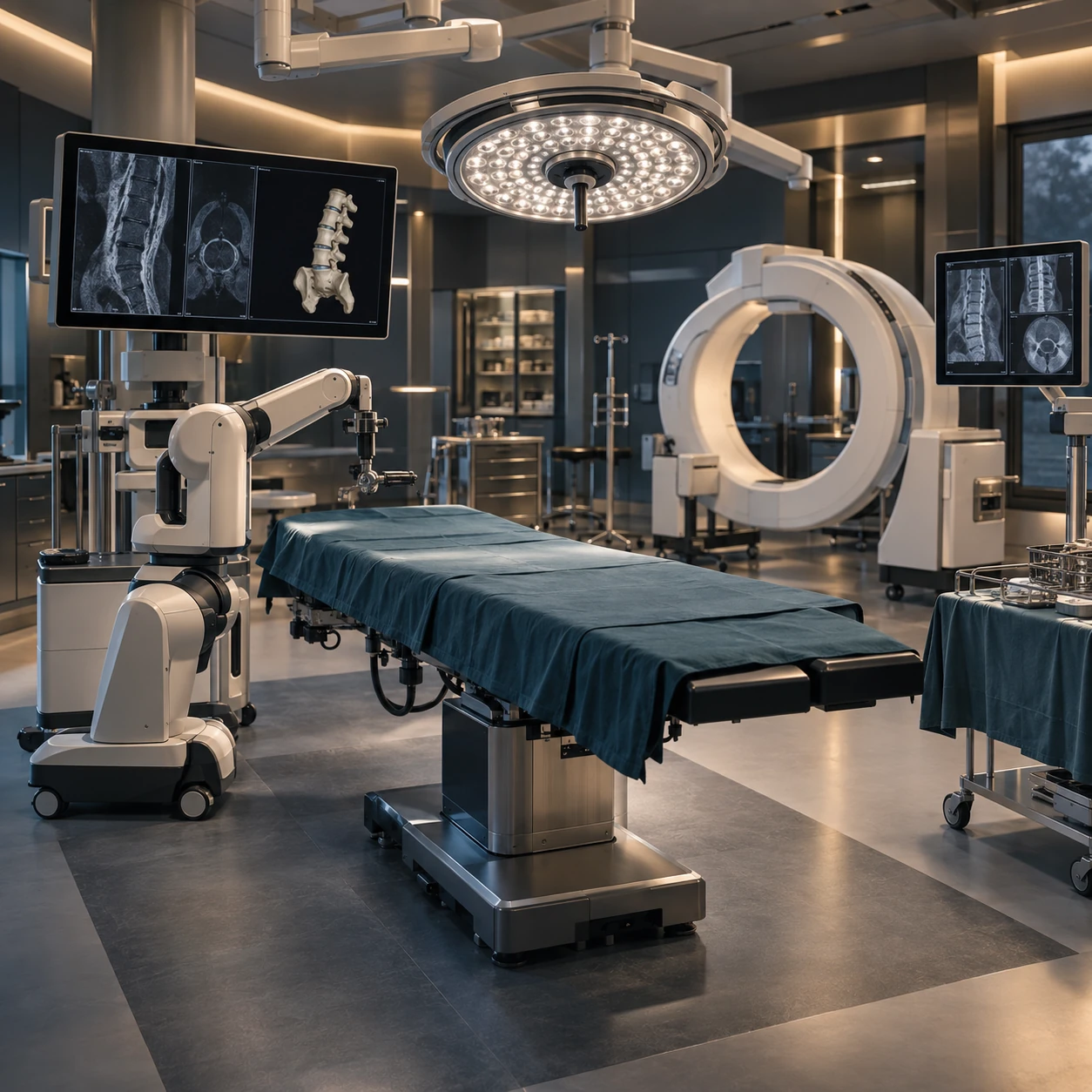
Minimally invasive spine surgery describes an approach, not one operation. It can use smaller incisions and focused working corridors to reach the area needing treatment. Depending on the diagnosis, the underlying procedure may be a discectomy, decompression, or fusion.
The purpose is to achieve the necessary nerve relief or stabilization while limiting disruption to surrounding muscles and tissue. A smaller incision is useful only if the operation still fully addresses your condition.
When might it help?
Suitability depends on the location and extent of the problem, your alignment, prior surgery, and the goals of the operation. Some conditions are well suited to a focused approach, while others need a broader exposure.
A focal disc or nerve problem
Selected disc herniations and areas of stenosis can be reached through a limited corridor. The surgeon must still be able to identify the anatomy and decompress the nerve safely.
Selected fusion procedures
Some patients who need stabilization can have portions of the operation performed through smaller exposures. The approach may be posterior or lateral, or use a combination of techniques. Minimally invasive does not mean there is no fusion healing period.
When a wider exposure is appropriate
Complex deformity, extensive disease, certain revision problems, or other anatomy may call for a conventional approach. A larger incision may be the better choice when it helps accomplish the surgical goals safely.
Discussing the benefit for you
Ask which part of the operation is minimally invasive, what practical recovery benefit is expected, and what would prompt a change in approach. Dr. Jalali will place the technique in the context of your diagnosis rather than using incision size as the main measure of success.
RELATED CONDITIONS
What happens during surgery?
Depending on the operation, the surgeon may use tubular retractors, magnification, small working portals, or implants placed through focused incisions. The underlying steps—removing compression, placing graft, or providing stabilization—remain specific to the chosen procedure.
A tailored combination
An operation may combine limited exposures with a more open portion. This does not represent a different standard of care; it reflects what is needed to treat each part of the problem.
Recovery is a gradual return to activity.
Less tissue disruption may reduce early soreness or support a faster initial recovery in selected patients. Results vary with the operation and the individual. The number of levels, nerve function, conditioning, and general health remain important.
Follow the recovery plan for the actual procedure. A small incision does not remove lifting precautions, eliminate complications, or mean implants and bone have finished healing.
Understand the tradeoffs.
Risks include infection, bleeding, nerve injury, spinal fluid leak, incomplete decompression, and the possible need to enlarge the exposure. Fusion procedures also carry risks of nonunion and implant problems. The approach does not eliminate the risks of the underlying operation.
YOUR QUESTIONS, ANSWERED
Before you decide.
Is minimally invasive the same as laser surgery?
No. The term describes how the spine is accessed. A laser is not what defines a minimally invasive operation.
Does everyone recover faster?
No. Recovery depends on the diagnosis, procedure, and patient. Any expected advantage should be discussed specifically.
Can all spine surgery be done this way?
No. Some problems require a broader exposure or a combination of techniques.
Further patient education: AAOS: minimally invasive spine surgery · AAOS: spinal fusion
General education to support a conversation with your surgeon. Follow the instructions provided for your individual care.
LESS PAIN. BETTER MOVEMENT. ACTIVE LIFE.
Start with a conversation.
Bring your questions, your goals, and your prior imaging. Together, we can discuss which options fit your diagnosis and the activities you want to return to.
Request an appointment →Community Orthopedic Medical Group
26401 Crown Valley Pkwy #101, Mission Viejo, CA