THE ATHLETIC SPINE / CERVICAL SPINE SURGERY
Posterior Cervical Foraminotomy
Targeted relief for a compressed nerve.
Creating space around a nerve from the back of the neck, often without a fusion.
Omid Jalali, MD · Orthopedic Spine Surgeon
Mission Viejo · Orange County
What is posterior cervical foraminotomy?
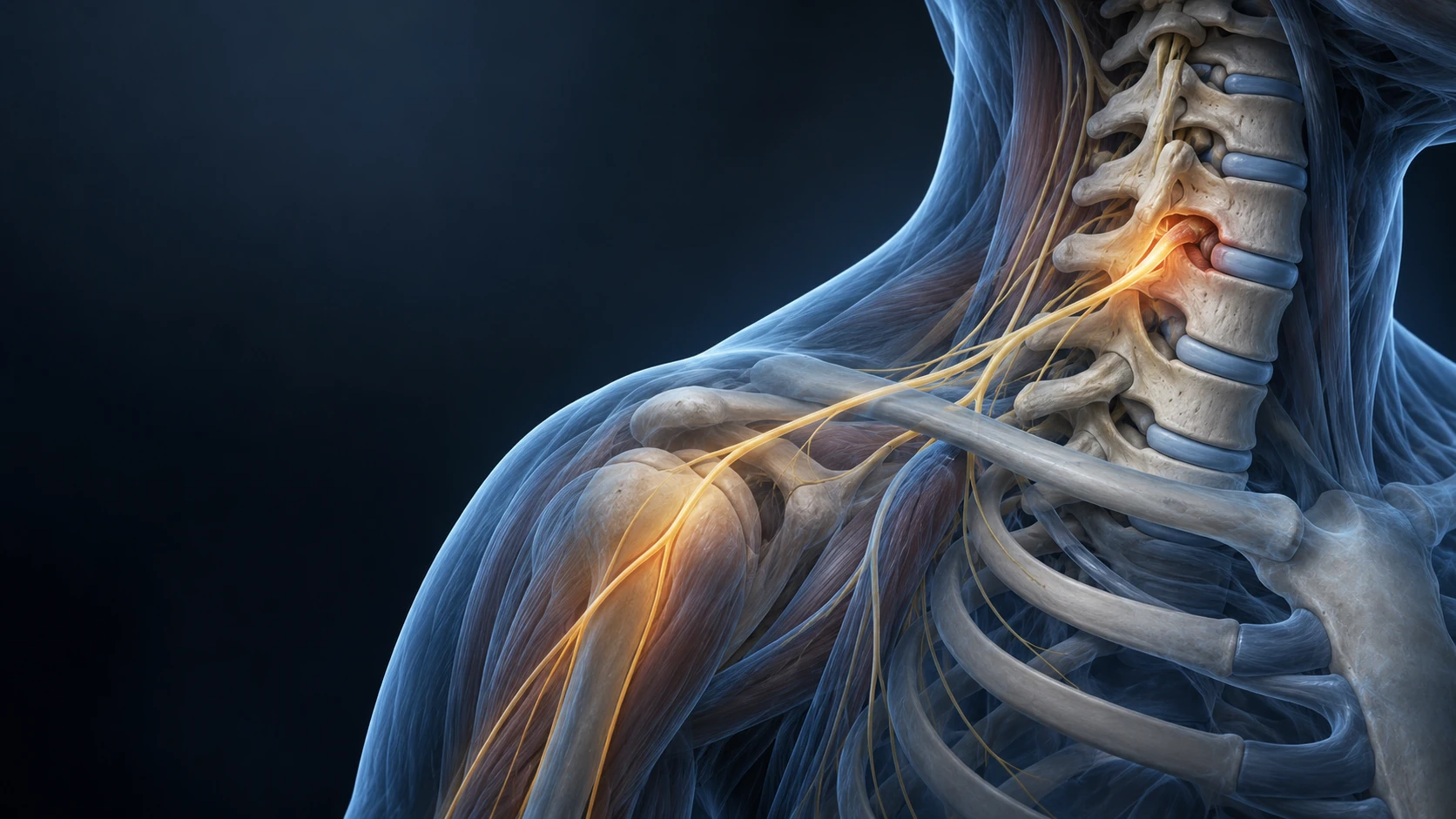
Posterior cervical foraminotomy enlarges the opening where a nerve leaves the neck. Through an approach from the back, the surgeon removes selected bone or disc material pressing on that nerve. In suitable cases, it relieves nerve compression while preserving movement at the treated segment.
This is a focused operation for a particular pattern of nerve-root compression. It is different from a broad decompression for spinal cord compression, and it does not replace every indication for ACDF or disc replacement.
Watch on YouTube ↗
When might it help?
This approach may be considered when arm symptoms can be traced to a nerve compressed near its exit from the spine. The side and level of the compression should match the pattern of pain, sensory change, or weakness.
Pain traveling down one arm
A disc fragment or bony narrowing in the nerve opening can cause persistent shoulder, arm, or hand symptoms. Foraminotomy may be appropriate when these continue despite nonsurgical care or when weakness makes earlier treatment necessary.
Preserving stability and movement
The spine should have an alignment and stability pattern that permits a focused decompression. Significant instability, certain central disc problems, or substantial spinal cord compression may require a different operation.
Symptoms after an anterior operation
Selected patients with ongoing or recurrent radicular symptoms following an anterior cervical procedure may benefit from a posterior approach. Dr. Jalali first evaluates the prior operation, fusion or implant status, and other possible causes of symptoms; additional surgery is not automatic.
What it is most likely to improve
The principal target is nerve-related arm pain. Improvement in numbness or strength can be slower or incomplete. Neck pain from other structures may remain, so your consultation should separate the symptoms the procedure addresses from those it may not.
RELATED CONDITIONS
What happens during surgery?
The surgeon accesses the involved level from the back of the neck. Magnification and, in selected cases, a tubular approach help expose the nerve opening. Small amounts of bone and any accessible disc fragment causing pressure are removed while preserving supporting structures where possible.
Will a fusion be needed?
Many suitable cases do not require fusion. The amount of decompression needed, pre-existing stability, and previous surgery influence that decision. Ask how these factors apply to your particular level.
Recovery is a gradual return to activity.
Soreness across the back of the neck and shoulder muscles can occur initially. Walking and light activity usually begin early, with a gradual progression based on comfort and your surgeon’s instructions.
Driving requires adequate head movement and freedom from impairing medication. Return to desk work, physical work, and sport follows different timelines. Physical therapy may help restore strength and comfortable movement once appropriate.
Understand the tradeoffs.
Risks include infection, bleeding, nerve injury, spinal fluid leak, persistent or recurrent symptoms, and postoperative neck pain. Instability or recurrent narrowing may lead to another procedure or fusion later.
YOUR QUESTIONS, ANSWERED
Before you decide.
Is the entire disc removed?
Usually the goal is removal of the specific material or bone causing pressure rather than removal and replacement of the entire disc.
Can it help after ACDF?
It can in selected cases with a clearly identified nerve-root problem. The previous construct and the source of symptoms must be assessed first.
Will it relieve all neck pain?
It is primarily aimed at nerve-related arm symptoms. Neck pain may have additional causes that need separate treatment.
Further patient education: AAOS: cervical surgery options
General education to support a conversation with your surgeon. Follow the instructions provided for your individual care.
LESS PAIN. BETTER MOVEMENT. ACTIVE LIFE.
Start with a conversation.
Bring your questions, your goals, and your prior imaging. Together, we can discuss which options fit your diagnosis and the activities you want to return to.
Request an appointment →Community Orthopedic Medical Group
26401 Crown Valley Pkwy #101, Mission Viejo, CA